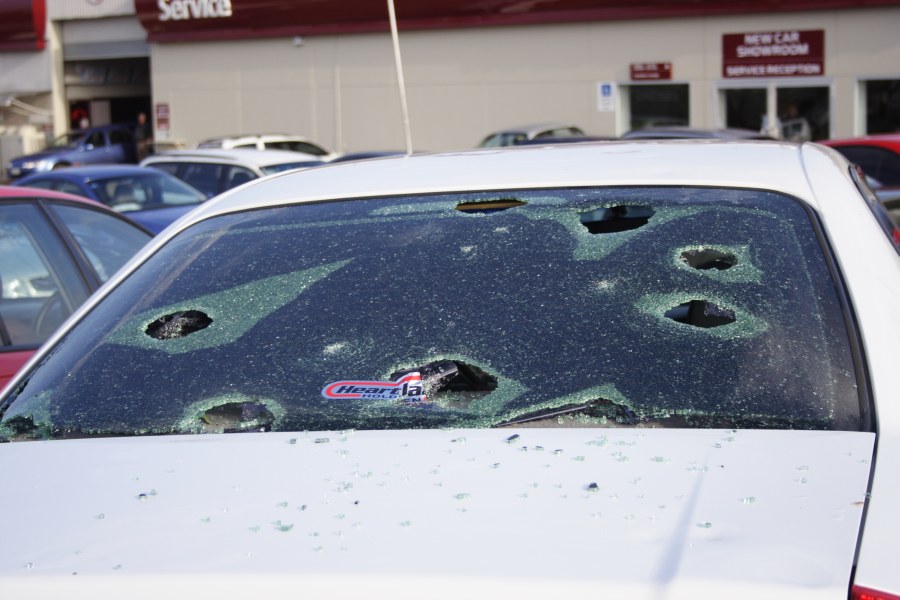
After a hailstorm, the first question is always the same: how big was the hail where I live? Radar can give a good estimate, but it cannot give a measurement. Here is how it works and where it falls short.
What radar actually sees
Weather radar sends out a pulse and measures what bounces back. Hailstones return a much stronger signal than rain. Forecasters look at the strength of that signal (called reflectivity) at different heights inside the storm. A very strong signal that reaches well above the freezing level is a sign that large hail is being held up and growing.
From signal to hail size
Methods such as the Maximum Expected Size of Hail (MESH) turn those radar readings into an estimated stone size for each patch of the storm path. It is a statistical estimate. It tends to do well at telling “small” from “damaging”, and less well at telling a 4 cm stone from a 5 cm one.
Where it falls short
- Radar sees the storm overhead, not the ground. Stones can melt, break or drift before they land.
- The narrow core of a hail swath can be a few hundred metres wide, so two streets apart can be very different.
- Ground reports (photos, a coin or ruler next to a stone) are still the best check. If you have one, keep it.
Why it matters for car damage
Dents from stones around 2 cm and up are common on bonnets, roofs and boots. Most small to medium dents (5c to 50c coin size) are the sort paintless dent repair handles well. Large creases and torn paint are not. If your car was in the path, a free quote from HailDent will tell you honestly which side of that line you are on.
Our after-storm hail maps are coming soon. They will use Bureau of Meteorology radar to show estimated hail sizes by suburb, as a guide only. They will not be a warning service. See the current hail maps page for progress.